When you click the link, it will take you to the corresponding page.
テイスティングコース
先付け
前菜盛り合わせ
和牛タンの食べ比べ
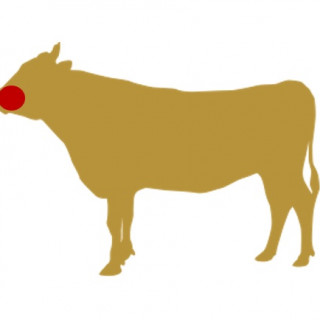
In many countries, beef tongue is used in a variety of dishes. In Japan, the beef tongue is called 牛タン, which combines the word Ox in Japanese and the Japanese pronunciation of the tongue. It is a popular menu in Japanese barbecue restaurants to slice the soft part of the beef tongue and grill it. Other dishes of Japanese barbecue are usually served with a soy sauce-based sauce called Dare(タレ), and beef tongue is often served with salt, so this salt is also called tongue salt(タン塩). When eating the beef tongue, we can also sprinkle lemon juice or put chopped green onions to eat together. Beef tongue is Sendai (Location of Miyagi Prefectural Office) speciality cuisine.
希少部位 塩
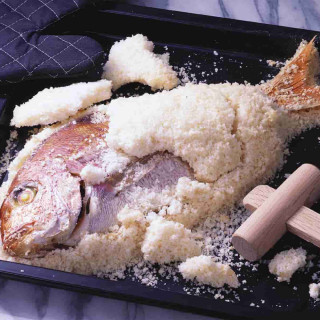
Salt-grilling, or "shioyaki," is one of the fundamental methods of Japanese grilling. "Shio" means salt, and "yaki" means grill — this cooking method involves sprinkling salt over the ingredient before grilling, and it's commonly used for fish and other seafood. For white-fleshed or small fish, it’s best to salt them right before grilling. For oily or blue-backed fish, it's recommended to salt them 30 minutes to 1 hour in advance. In either case, any moisture that comes out should be wiped off before cooking. When grilling fish, a metal skewer (called kanagushi) is often used. There are various techniques and names for how to insert the skewer. For example, "Odori-gushi" (also known as "Uneri-gushi") is a method where the fish is skewered in a way that makes it appear to be swimming on the plate. The body is bent in a wave-like shape, and the tail is lifted. " Nobori-gushi" is a similar method, named after the idea of swimming upstream, and it's typically used for river fish. Other methods include "Hira-gushi," which keeps the fish straight while grilling, and "Nihon-gushi," which uses two skewers to grill large fish like sea bream without cutting them.
旬の焼き野菜
特選サーロイン焼きしゃぶ
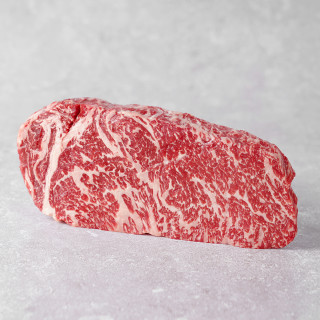
The sirloin is one of the most popular cuts of beef. It is located in the back of the loin and is characterized by its moderate fat and tenderness. The sirloin is part of the "short loin" and lies between the ribeye and the tenderloin. This cut is especially delicious as a steak, offering a juicy and flavorful taste. There are several theories about the origin of the name "sirloin." One of them is that King Charles II of England named this cut "Sir Loin." Whether this story is true or not is uncertain, but the name "sirloin" has since become widespread. Sirloin is used in various dishes, including grilled meat, steaks, and roast beef. It is particularly popular as a steak, and when cooked properly, its umami can be maximized. To enjoy the texture and flavor of the meat, it is often simply seasoned with salt and pepper. The sirloin is an indispensable cut of beef used in everything from home cooking to high-end restaurants.
逸品
上ロース ハラミ タレ
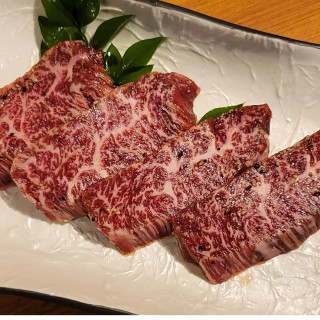
The outside skirt, known as ハラミ (harami) in Japanese, is a beef cut taken from the diaphragm muscle of the cow. It is a long, flat piece of meat, known for its rich flavor and tenderness. The outside skirt is located near the cow's belly, specifically between the chest and the abdominal muscles. This cut is favored for its marbling and the intense beefy taste it provides. It's often used in grilling and barbecuing due to its ability to retain flavor and moisture when cooked over high heat. Popular dishes include fajitas, Korean bulgogi, and Japanese yakiniku.
お食事
デザート